We Wanted So Much More for Darren Till
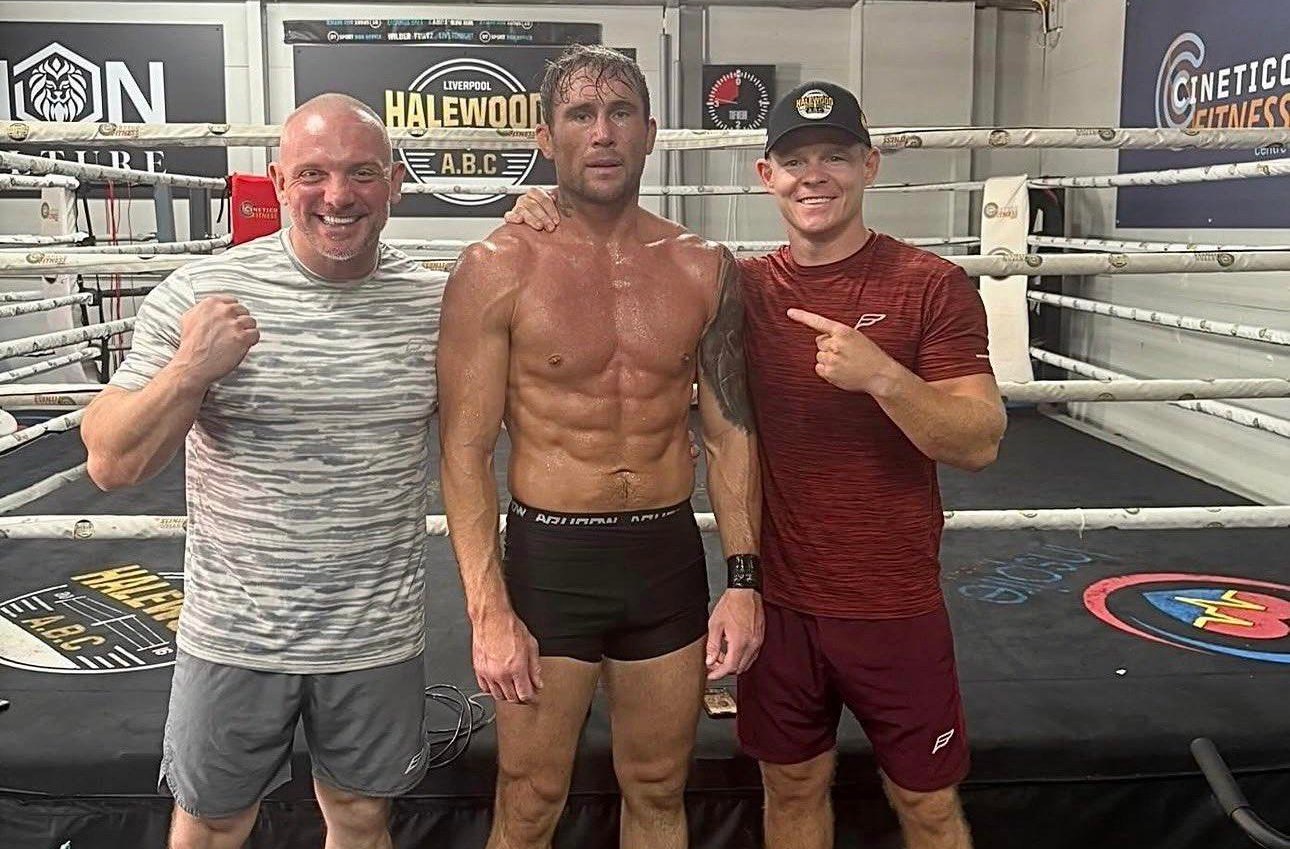
There is a specific kind of heartbreak reserved for the fighter you believed in early. Not the legend who let you down at the end, but the prospect who had everything, who made you sit up and point at the screen and tell whoever was in the room, "Watch this guy, he's going to be a problem." Darren Till was that guy. For a stretch in 2017 and 2018 he was the most magnetic thing in the welterweight division, and we are still a little bitter about how it went.
So before he steps into a bare-knuckle ring on May 30, we want to talk about the version of him we fell for, and why that version never got the ending it deserved.
The rise was genuinely thrilling
Remember what he looked like coming up.
October 2017, Gdansk. Till headlines against Donald Cerrone, one of the most experienced and dangerous strikers the division had ever seen, a man who had finished a generation of welterweights. Cerrone was supposed to be the test that told us whether the big Scouser was real. Till knocked him out in the first round. Not a lucky shot, a beating. He walked through one of the sport's great veterans like he was a sparring partner, and he did it with a southpaw cool that made it look easy.
Then came the moment that should have launched everything. May 2018, Liverpool, his hometown, the UFC's first card in the city, and Till headlining against Stephen "Wonderboy" Thompson, a two-time title challenger and arguably the most technical point-striker in MMA. Till won. The decision was debated, the weight cut was a disaster, but he beat Wonderboy in front of his own people and the building came apart. He was 17-0-1. He was the future. He got the title shot.
That was the ceiling we all saw. A massive, rangy, southpaw welterweight with real knockout power, fighting in an era when the division was wide open. The potential was not hype. It was right there on the screen.
And then there was the talking
Here is the part the highlight reels undersell, because it is the part that made him more than a fighter.
Darren Till was, and is, one of the most entertaining talkers combat sports has produced in years. Brash, quick, genuinely funny, with a Scouse accent and a total absence of fear about saying the wrong thing. He could sell a fight without sounding like he was reading from a script, because he wasn't. He had the confidence of a man who believed every word, and the timing of someone who knew exactly how funny he was being. Press conferences with Till in them were appointment viewing. He would wind up an opponent, charm a hostile room, and turn a staredown into theater, all in the same afternoon.
The confidence was the thing. Not media-trained confidence, the real, almost delusional kind that you cannot fake and cannot teach. A few that stuck:
- "I truly believe deep down that I cannot be beaten."
- "I'm destined to become the greatest fighter the world has known. If I didn't truly believe that, I'd go and teach, or do something else."
- "I don't want the UFC to pick opponents to give me an easier route. I want to fight the best, to know in my head I am the best."
- "I will dethrone the champion and start a new era. I'll be an active champion, so they can all get in line."
- "The market's in America, and I haven't even fought there. So why can't I bring a pay-per-view to Anfield? Why can't I? That's a dream."
Read those back and remember he was saying them as a kid from Liverpool who had barely cracked the rankings. Most fighters who talk like that are selling something. Till sounded like he genuinely could not conceive of losing, and for a while he made the rest of us believe it too.
That mattered. The UFC sells personalities as much as it sells fights, and Till had the rarest combination: he could back it up and he could make you laugh. In a sport full of media-trained mumblers, he was a character. You either loved him or you loved to hate him, and both of those are worth far more than indifference.
We loved him.
So what actually went wrong
Now the hard part, the bit no highlight reel wants to dwell on.
Start with the weight. The cut to 170 pounds was brutal and, frankly, unsustainable. Till is a big man, and the Wonderboy fight he missed weight badly and looked drained climbing into the cage. You cannot fight the best welterweights in the world while your body is shutting down on you, and his almost was. The walk-up version of Till was spectacular. The version that had spent fight week starving was a step slower and a beat more cautious.
Then came the title shot against Tyron Woodley at UFC 228, and the truth it exposed. Woodley took him down, controlled him, and finished him with a D'Arce choke in the second. It was the first time we saw that the grappling and the wrestling defense were not yet at championship level. The striking was elite. The rest of the game had gaps.
The Jorge Masvidal knockout at UFC London in March 2019 was the gut punch. Back in front of a British crowd, supposed to get back on track, Till got caught and folded by a left hand, and Masvidal launched his own legend off the back of it. After that, Till moved up to middleweight to escape the cut, and the results told a hard story: a good win over Kelvin Gastelum, then a string of close and not-so-close losses to Robert Whittaker, Derek Brunson, Dricus du Plessis, and finally Bo Nickal. Injuries piled up. Long layoffs. The momentum never came back, and the UFC eventually let him go.
The cruelest reading is that Till's game had one truly world-class weapon, his striking, in an era where the men at the very top could take him down or out-grind him. The kinder and probably truer reading is that the weight cut robbed us of the best version of him before we ever really got to see it defend a title.
Bare knuckle, at home, against a familiar kind of opponent
Which brings us to Saturday.
On May 30, 2026, Darren Till makes his bare-knuckle debut at BKFC: Birmingham inside the Utilita Arena, back in front of a British crowd, which has always been when he is at his most dangerous and his most alive. He has signed a multi-fight deal with the promotion after walking away from Misfits Boxing, and he is, by every photo from camp, in the best shape he has looked in years.
His opponent is Aaron Chalmers, and the matchup is interesting precisely because of who Chalmers is. A former Geordie Shore reality-TV star turned legitimate combat athlete, Chalmers went 5-2 in MMA under the Bellator banner, boxed an exhibition against Floyd Mayweather at the O2 in 2023, and stopped Chas Symonds in his own BKFC debut in Dubai earlier this year. He is a real fighter, not a celebrity tomato can, with the showman's instinct for a big moment and a crowd that follows him.
Does this play to Till's strengths? On paper, yes, and emphatically so. Bare-knuckle boxing strips away the grappling and the takedowns, the exact areas where Till's UFC career came undone. What is left is a phone-booth striking contest, two men squared up, hands only, and that is the single thing Darren Till has always done better than almost anyone he has shared a ring with. No cage to be pressed against, no wrestling to drain his gas tank, no five rounds of positional chess. Just timing, range, and that southpaw left hand that ended Cerrone. Bare knuckle is arguably the purest possible distillation of what made Till special in the first place.
Chalmers is durable and game and will not be intimidated by the occasion, which makes it a real fight rather than a coronation. But if there is a format built to remind everyone what Darren Till's hands can do, this is it.
There is a blueprint for this, and his name is Mike Perry
If you want a reason to believe a UFC washout can become a bare-knuckle force, look at the man who already did it.
Mike "Platinum" Perry went 7-8 across fifteen UFC fights. Tough, heavy-handed, fun to watch, and never once a real contender. The UFC let him go and the obituaries got written. Then he walked into BKFC and turned into something nobody expected: the self-styled "King of Violence," the promotion's biggest draw, a man who started feeding former UFC champions through the meat grinder. He stopped Luke Rockhold, a former middleweight champion, who quit on the stool. He beat Eddie Alvarez, a former lightweight champion. He flattened Thiago Alves in about a minute. The fighter who looked ordinary in a cage looked terrifying once you took the gloves, the takedowns, and the grappling away from his opponents.
That is the exact mechanism that should worry Aaron Chalmers. Perry's gift was never well-roundedness. It was that, stripped to pure striking with four-ounce-or-less protection, his power and his bad intentions became the whole fight. Till is a more refined striker than Perry ever was, a genuine technician where Perry is a brawler, and he is walking into the same format that turned Perry from a cut man into a star. The precedent is not a guarantee. But it is a very loud hint about what happens when a heavy-handed ex-UFC fighter finds the rule set that finally rewards the one thing he does best.
Till has needled Perry over the years, the way charismatic fighters do. The irony is that Perry may have drawn the map Till is about to follow.
What we're actually hoping for
We are not going to pretend this is a UFC title fight. It is not. The version of Till who was going to rule welterweight is gone, lost somewhere on a scale in 2018, and no bare-knuckle win brings that timeline back.
But there is something fitting about him ending up here, in a sport that asks for exactly the thing he was always best at, in front of the British fans who never stopped chanting his name. The brash, funny, fearless man who could light up a press conference still has the most dangerous left hand in the building, and on May 30 he gets to throw it without a single thing standing in the way of it landing.
We wanted so much more for Darren Till than the UFC gave him room to be. We still do. And we will absolutely be watching to see if, just this once, the format finally suits the fighter.
Rate Darren Till's bare-knuckle debut, and every fight that matters, on Good Fights. Never miss a Good Fight.