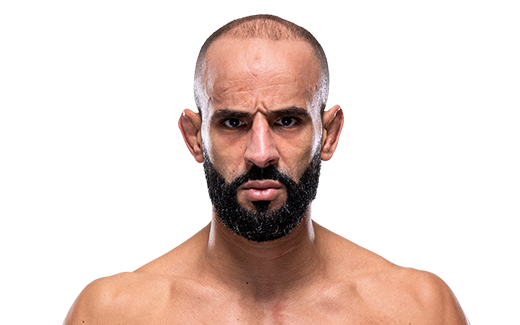
Khama Worthy
About
Pittsburgh journeyman lightweight who earned his UFC shot at 32, peaked early with explosive knockout power, then fell to a brutal losing streak before rebuilding outside the octagon.
See moreSee less
Khama Worthy is a Pittsburgh-born lightweight who turned pro in 2012 after starting MMA training at age 20. For seven years he competed mostly in regional promotions across the American Northeast, building a 14-6 record, winning the 247 Fighting Championship Lightweight Title, and establishing himself as a finisher with knockout power. At 32, when most fighters are either established stars or past their prime, Worthy got his UFC call as a late replacement for Clay Collard at UFC 241 in August 2019. Against Devonte Smith, he made the most of the opportunity, blitzing his opponent with aggressive striking and earning a first-round TKO that came as an upset. The performance was so impressive it won him the UFC's Performance of the Night award and was named 2019 Upset of the Year, suggesting Worthy had finally found his level and had a real future in the big show.
He proved he belonged with a submission win over Luis Pena in June 2020, sinking a guillotine choke in the third round to earn a second consecutive UFC victory. But the momentum reversed sharply. Over the next fifteen months, Worthy faced three top-tier lightweights in succession and was stopped by all three in the first round: Ottman Azaitar in September 2020, Jamie Mullarkey in March 2021, and Jai Herbert in October 2021. The losses were brutal and swift, exposing the gap between a veteran regional fighter and UFC-level competition. In November 2021, the UFC released him.
Worthy bounced back competitively, returning to 247 Fighting Championship and recording wins by knockout and decision in 2022 before announcing a retirement from MMA later that year. He dabbled in professional boxing in early 2023, then signaled a return to MMA in 2024, picking up a decision win in April. His career reflects a common arc: late bloomer with one shining moment at a higher level, but ultimately a gatekeeper who found his true home in regional competition.